
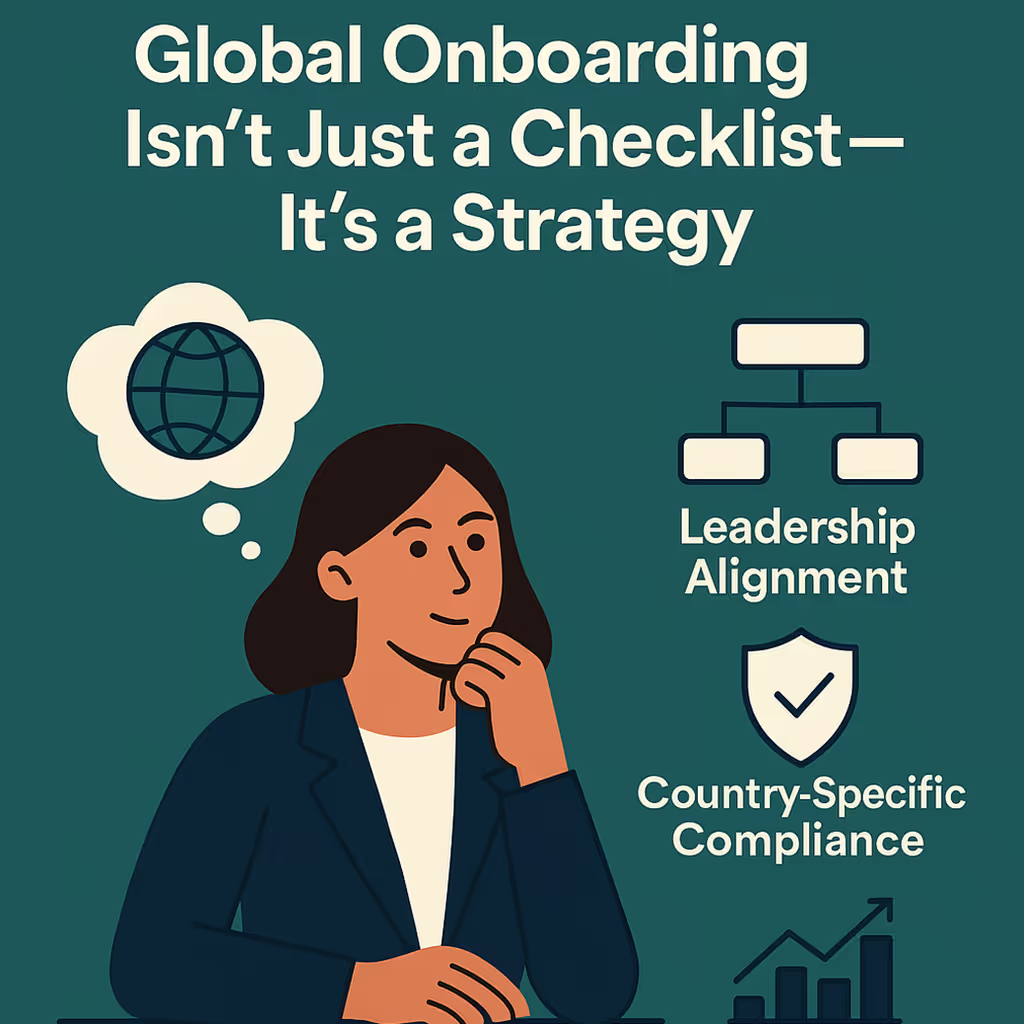
A field-tested playbook for HR leaders building onboarding systems that scale across countries, cultures, and compliance regimes
HR Leader (Aisha): We’re onboarding in India, Germany, and the U.K.—but our process was built for California.
People Ops Advisor (Jo): That’s why it’s breaking. You don’t need more checklists. You need a strategy.
Why You Need a Global Onboarding Strategy, Not Just a Checklist
Global onboarding isn’t just about paperwork. It’s about protecting trust, compliance, and early performance. When it fails, the consequences are real:
- Delayed payroll registration → missed pay, reputational damage
- Wrong employment classification → fines, permanent record issues
- No local context or role clarity → disengagement, fast attrition
- Shadow compliance gaps → audit risk from immigration, tax, or labor authorities
These aren’t edge cases. They’re what happens when HR is expected to "just onboard" without global infrastructure.
The Strategic Layer: Aligning Onboarding With Business Growth
High-performing HR teams don’t treat global onboarding as task work. They build systems with:
- Tiered onboarding flows based on employment type (FTE, EOR, contractor)
- Cross-functional sprints that involve Legal, IT, HR, and local managers
- Clear global vs. local ownership, so nothing falls through the cracks
When onboarding is tied to how the business scales, it becomes proactive—not reactive.
Country-Specific Red Flags and Fixes
CountryRiskPro TipGermanyTax ID setup can delay payrollInitiate tax ID request before Day 1IndiaHigh misclassification risk with contractorsRun scope and role through legal reviewU.K.Must verify right-to-work before first dayUse ID verification tools with remote capabilities
Even if you hire through an EOR, local rules still apply. HR needs to see around corners.
The Global Onboarding Sprint Framework
Here’s a practical model HR teams can use to stay ahead:
T-30:
- Review contract type and local classification
- Submit tax ID/paperwork requests (if needed)
T-14:
- Provision tech tools based on country-specific data rules
- Send country-specific welcome kit and intro email
T-5:
- Manager alignment call: 30/60/90 plan + intro to team
- Set timezone coordination norms
Day 1:
- Role clarity + buddy system
- Confirm compliance docs and tool access
Day 30:
- 1:1 check-in with HR and manager
- Optional pulse survey for onboarding experience
What to Track (and How to Use It)
Global teams that scale onboarding well track:
- Time to full provisioning (tool access, HRIS setup)
- Day 1 readiness rate (hire is fully active on day one)
- First 90-day retention by country
- Onboarding satisfaction split by region and job level
These aren’t just metrics—they’re signals of system health and HR credibility.
What to Clarify with Leadership Before Scaling Internationally
Before your team hires in a new country, make sure you have answers to these key questions:
- Are we employing directly or through an EOR?
- Who owns legal and compliance oversight for this region?
- What benefits expectations exist for this market? Are we pursuing global parity or local relevance?
- Who approves onboarding timelines—and what is considered "day one ready"?
- How are we tracking success and feedback by region?
These questions don’t just prevent fire drills—they build alignment, clarity, and confidence across departments.
Global Tool Access + Data Privacy Map
Provisioning global tools is more than IT—it’s a compliance question. Here’s a quick-reference chart to help HR teams avoid common blind spots:
ToolRisk RegionCommon Compliance FlagSlackEUU.S.-based servers may raise GDPR concernsBambooHRIndiaLocal regulations may restrict salary visibilityZoomChinaConnectivity issues or restrictions possibleGoogle DriveBrazilLGPD (Brazilian data law) may require data residency review
Looping in IT and Legal early can prevent last-minute access issues and future audit risks.
Quick Self-Audit: Is Your Onboarding Global-Ready?
Use these five questions to pressure-test your global onboarding readiness:
- Do we track onboarding completion and readiness by country or region?
- Is there a point-of-contact for onboarding support in each major timezone?
- Do managers understand how onboarding expectations vary across locations?
- Are our onboarding tools and platforms compliant with regional data regulations?
- Have we localized any of our onboarding content (language, policy, or legal context)?
If you answered “no” to more than one, it may be time to revisit your process before your next international hire.
Global onboarding is a leadership function. It’s how HR sets the tone for process, clarity, and care across borders.
This framework isn’t perfect. But it’s a proven global onboarding strategy that helps HR teams move from reactive onboarding to scalable, strategic execution.
.svg)