
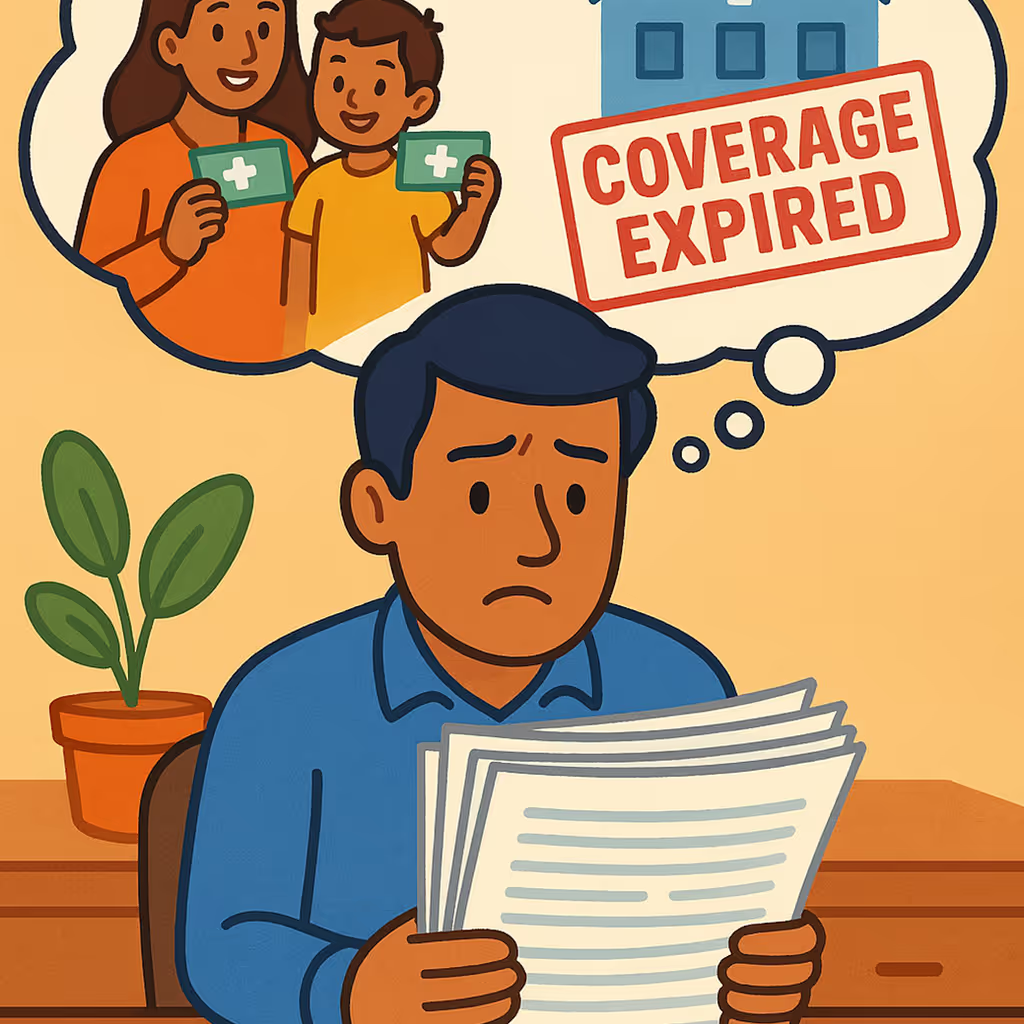
Why benefits decisions carry more weight when employees are tied to a visa
HR leaders already manage healthcare decisions with an eye toward cost, coverage, and compliance.
But when your employee is on an H-1B visa?
Health insurance becomes more than just a perk.
It becomes a risk management issue.
Here’s what HR teams need to know in 2025 to support foreign national employees and avoid coverage gaps that can derail their lives and your retention plans.
Why Health Insurance for H-1B Employees Is Uniquely Risky
While H-1B employees are eligible for the same employer-sponsored plans as U.S. citizens, a few things make their needs more complex:
- Visa status is tied to employment
- If they lose their job, they lose their visa and their insurance in the same moment.
- Their dependents are on H-4 visas
- You’re not just covering one person. You’re often covering a whole family, with no fallback if coverage is dropped.
- They may not qualify for ACA or Medicaid
- Public programs aren’t accessible to most H-1B families. That means no safety net.
- Many don’t understand the U.S. healthcare system
- Co-pays, deductibles, and provider networks are a new language, and a stressful one.
2025 HR Reality Check: Why It Matters More Now
Over the past year, we’ve seen more H-1B employees:
- Ask to delay start dates until coverage kicks in
- Leave jobs over benefit confusion or unexpected out-of-pocket costs
- Get caught in COBRA limbo after layoffs without knowing how it impacts their visa
In short: health insurance for H-1B employees is now part of the immigration risk conversation.
✅ HR Checklist: Supporting H-1B Employees During Benefits Enrollment
Use this checklist during onboarding, open enrollment, or policy changes:
- Confirm eligibility windows align with visa start dates
- Highlight dependent coverage options and timelines
- Spell out COBRA risks during layoffs or leaves of absence
- Provide plain-language summaries of medical, dental, and vision plans
- Offer guidance on in-network providers near their home
- Include FAQs tailored to visa holders in your benefits guide
- Ensure payroll and immigration timelines are aligned (especially for overseas moves)
💡 Tip: Ask This in Every H-1B Onboarding Call
“Is this your first time using U.S. health insurance?”
You’d be surprised how many say yes.
That one question can open the door to better support and trust from day one.
FAQs: What HR Teams Are Asking in 2025
Q: Can H-1B employees use the ACA exchange if they decline employer insurance?
A: Technically yes, but most are ineligible for subsidies and face high costs without public support.
Q: Are H-1B dependents covered automatically?
A: No. Spouses and children on H-4 visas must be actively enrolled. Don’t assume it’s a common source of gaps.
Q: What happens if an H-1B employee is laid off?
A: COBRA may provide coverage, but without income or a new sponsor, the employee could lose both their visa and health access simultaneously. HR should coordinate closely with legal during layoffs.
Health Insurance for H-1B Employees Isn’t Just a Perk. It’s a Lifeline.
If HR teams want to reduce turnover, ease onboarding, and build trust with international talent, health insurance is a key place to start.
Support doesn’t always mean a better plan.
Sometimes, it just means fewer unknowns.
.svg)